Someone recommends your business over coffee. A few days later, the person remembers your name and looks you up on their phone. What can they find without asking a second person for help?
A Facebook page or Google Business Profile may answer everything they need. But sometimes the services are scattered across posts, the opening hours are out of date, or the next step is hard to spot.
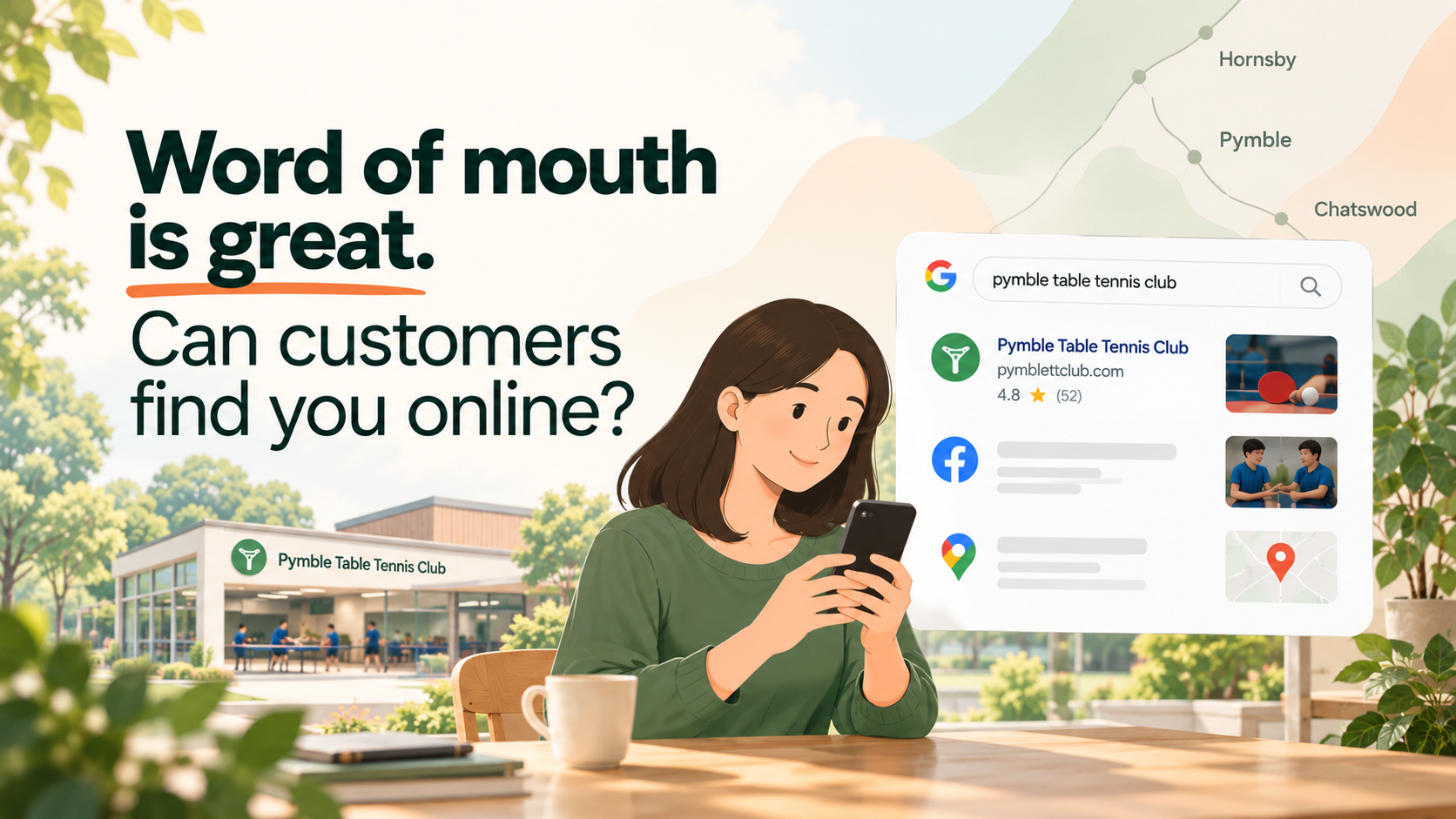
The cover is a conceptual illustration, not a live search screenshot. The displayed search and review details are fictional and are not results for Pymble Table Tennis Club.
What happens after the recommendation?
Word of mouth creates interest and a measure of trust. The person who heard about you still needs practical information before they can visit, book or enquire.
Imagine a parent hearing about a local sports club. They may want to know whether beginners are welcome, where sessions take place and how to join. Someone considering a beauty appointment may look for a service description, location and booking option.
Neither customer needs a complicated website. They need a reliable answer to the question that brought them there.
Keep the essentials together
For a first website, start with the details you would give someone on the phone: what you offer, who it is for, where you operate and how to contact you. Include genuine photos or examples where you have permission to use them.
A website gives those details a stable address you can put on your Google Business Profile, social pages, receipts or business cards. It also gives you control over how the information is organised.
That does not make social media unnecessary. It gives your posts somewhere useful to send people when they want the full picture. Your website, listings and social accounts still need consistent, up-to-date details.
An example from Pymble Table Tennis Club
Pymble Table Tennis Club is a real Coco website project. The club welcomes people with different experience levels and offers a mix of community play and coaching.
Its website needs to help visitors understand that offer, find relevant programmes and see a sensible next step. Showing those choices clearly is more useful than adding visual polish for its own sake.
This is an example of how information can be structured around visitors’ questions. We are not claiming the redesign caused a particular increase in enquiries or memberships.
Does every local business need a website now?
No. If an up-to-date social profile and business listing already answer customers’ questions and make contacting you easy, they may be sufficient for your current stage.
A website becomes worth considering when you want a dedicated home for several services, more detailed explanations, consistent links or a clearer path from discovery to enquiry.
Try searching for your business on a phone as if you have never heard of it. Can you find your services, location and next step without scrolling through old posts? Ask someone unfamiliar with the business to try the same exercise.
If the answers are difficult to find, our website design service can help organise them. If you are planning your first site, start with three questions that make the brief easier.